Welcome to Creative Toys
Previous
Fun with Lacing Part-3

Creative’s Fun with Lacing Part 3 | 4 Nature & World Boards | Age 3 & Up

د.إ325.00
Next

Smart Look & Find Differences | Spot & Describe Changes | Ages 3+

د.إ40.00
Look & find Differences

Smart Things that go Together 21 Self-Correcting Pairs Ages 3+

د.إ40.00

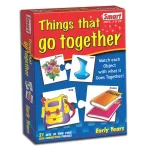
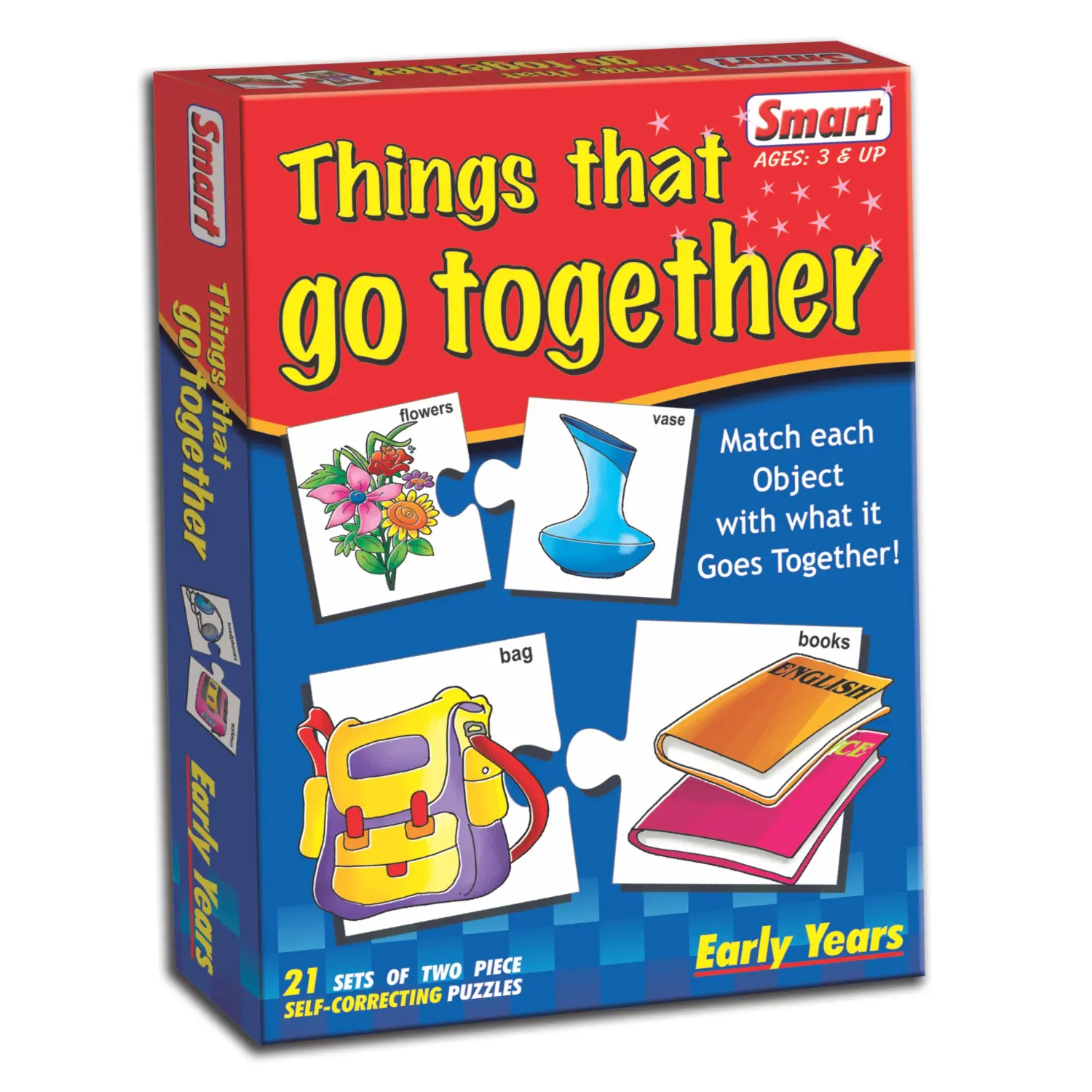
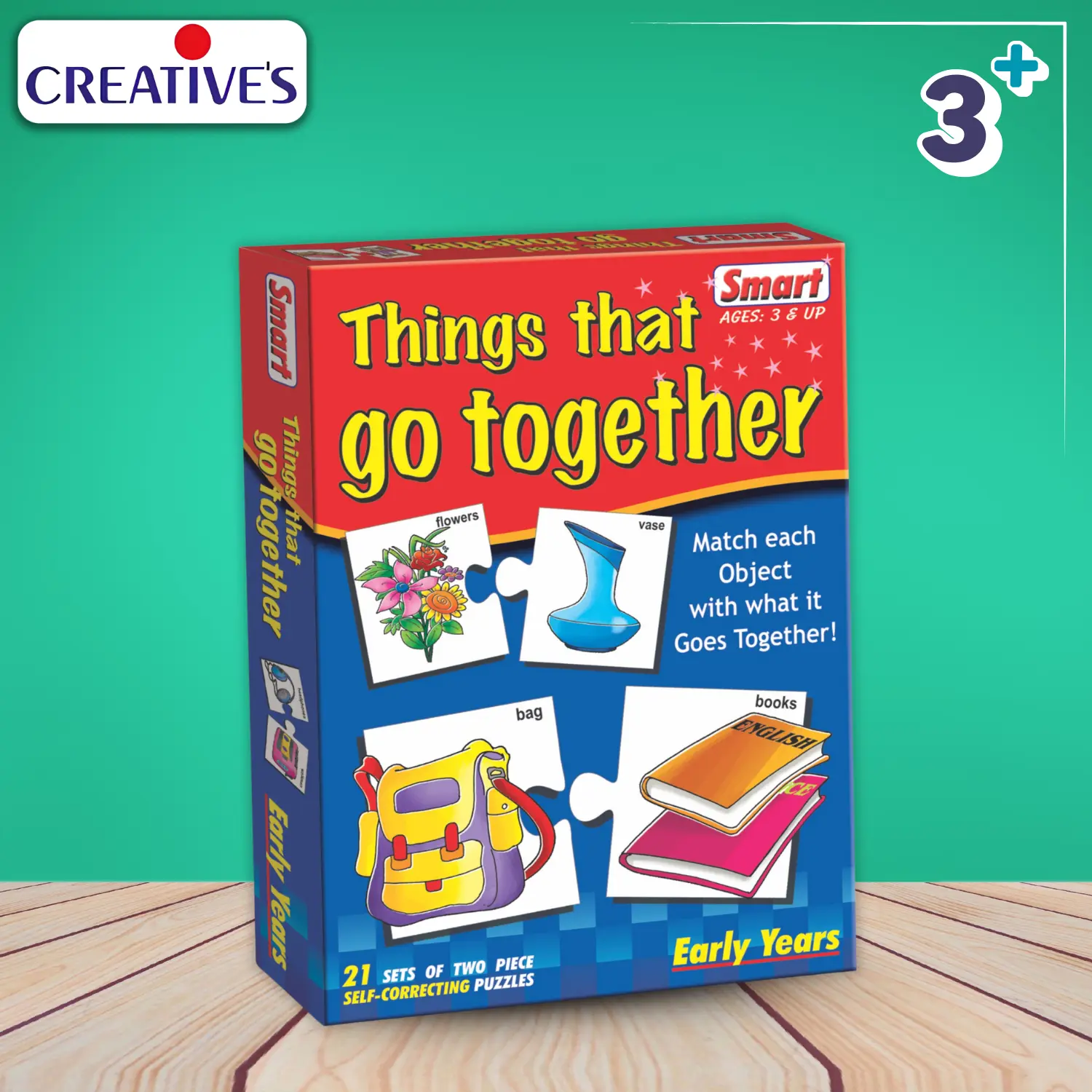
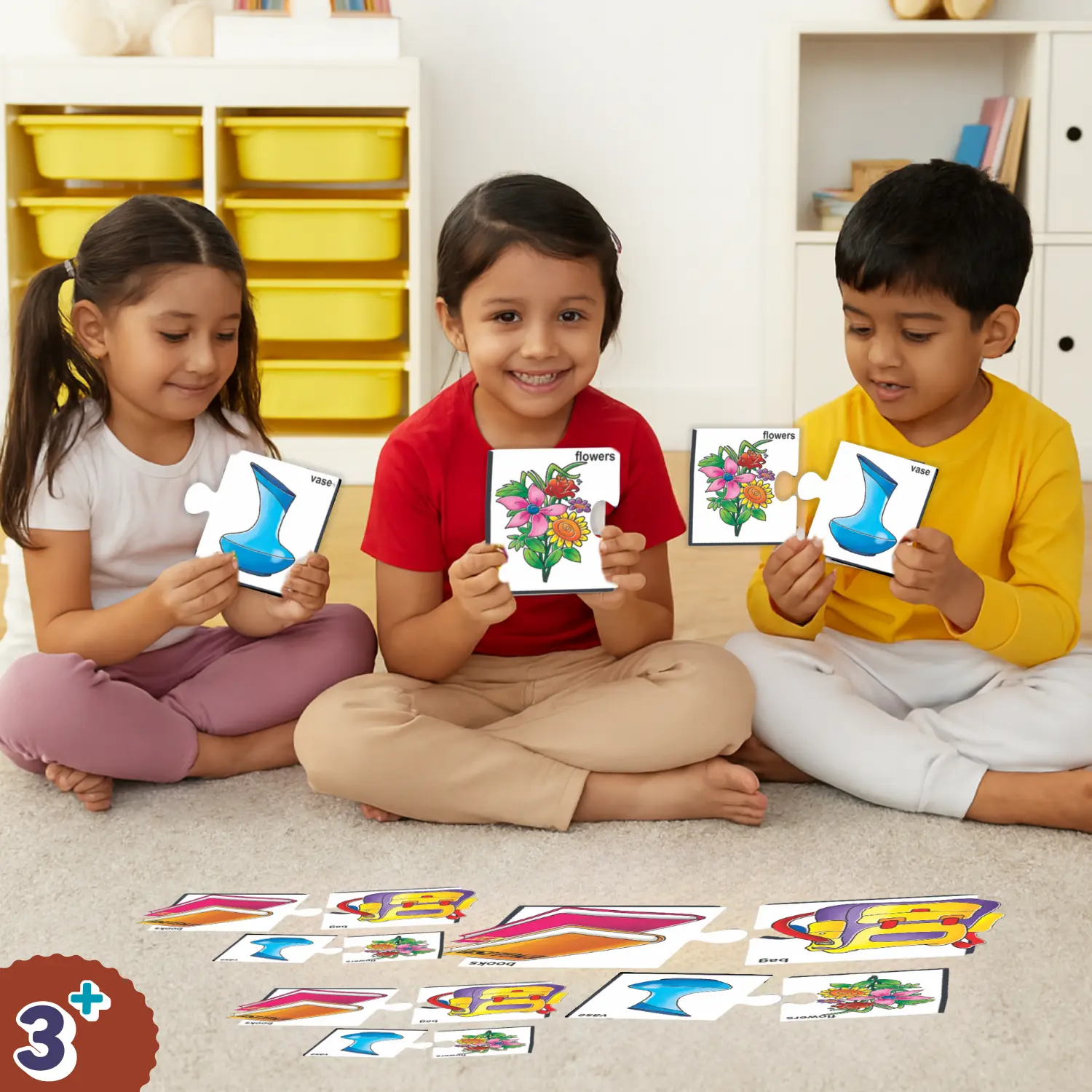
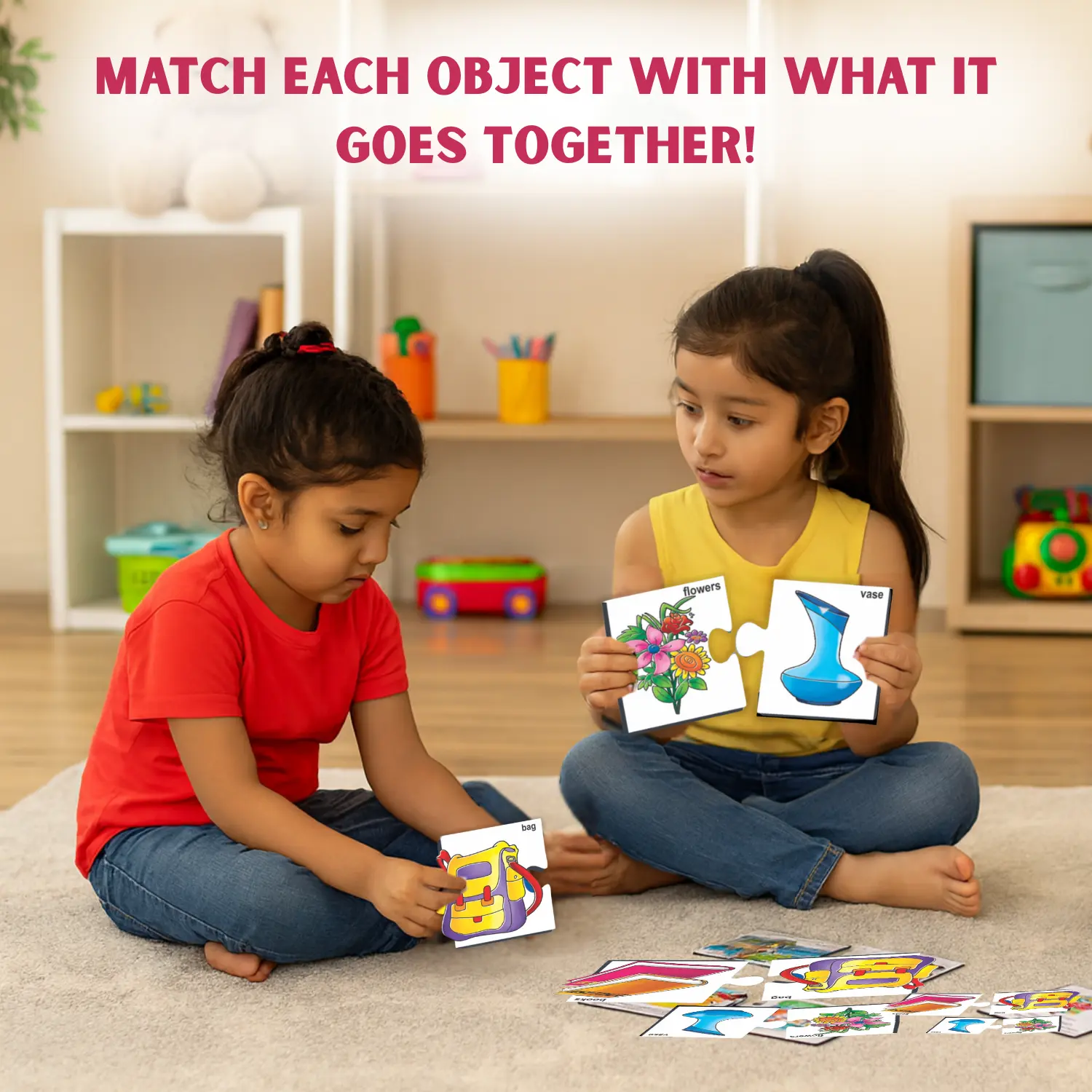
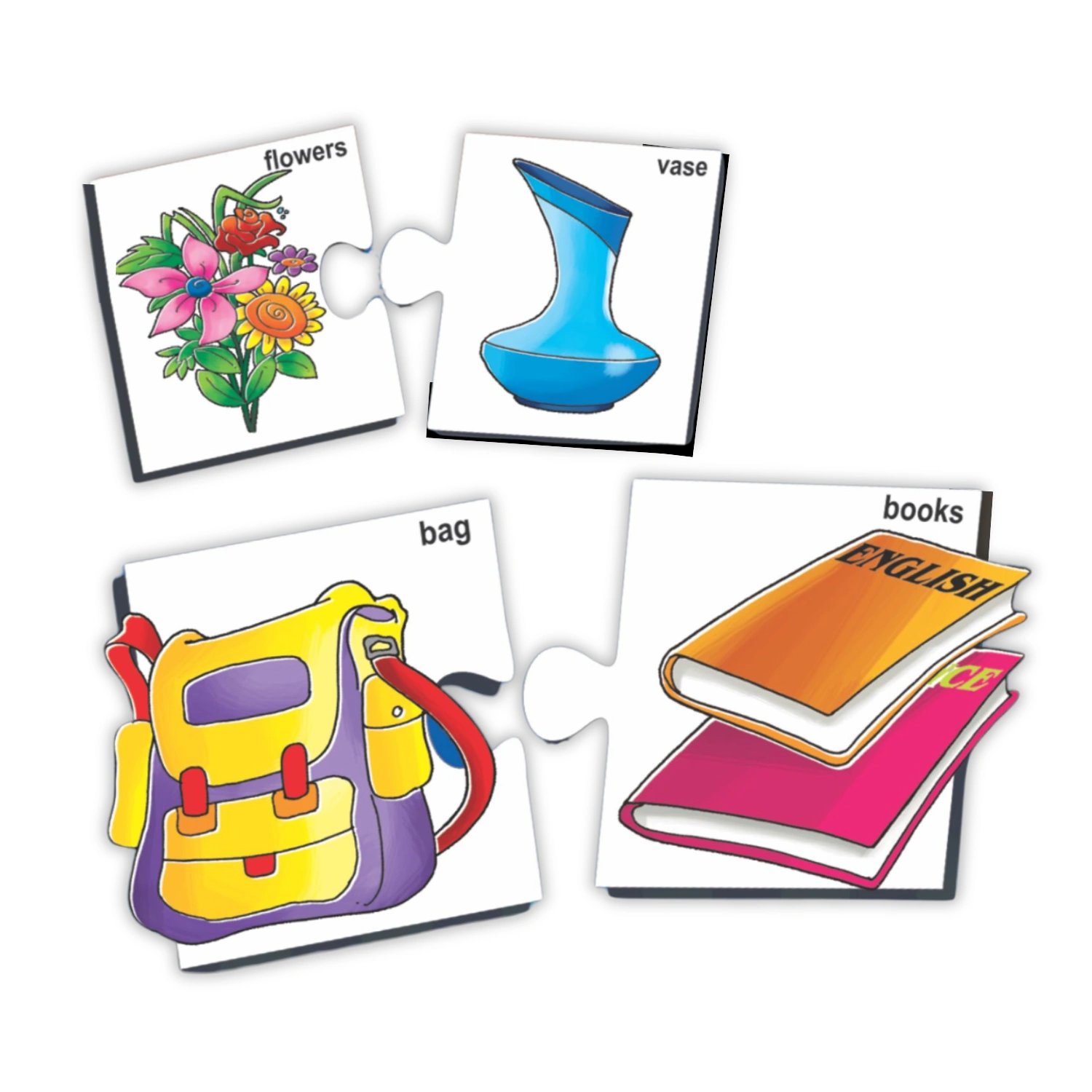
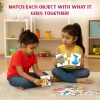
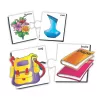
Smart Things that go Together gives children aged 3 and up 21 self-correcting two-piece puzzles – each matching two objects that logically belong together. Flowers pair with a vase, a bag pairs with books. Self-correcting puzzle shapes confirm correct reasoning, building association skills, logical thinking, vocabulary, and the understanding that objects in the world have purposeful relationships.

About This Product

  • THINGS THAT GO TOGETHER SELF-CORRECTING PUZZLE AGES 3 –
    21 two-piece puzzles each matching two logically related objects – flowers/vase, bag/books, and 19 more everyday object pairs.
  • ASSOCIATION & LOGICAL REASONING PUZZLE ACTIVITY –
    Children must understand WHY objects belong together to match correctly – flowers need a vase, a bag holds books – building associative thinking beyond simple visual matching.
  • SELF-CORRECTING PUZZLE SHAPES INDEPENDENT PLAY –
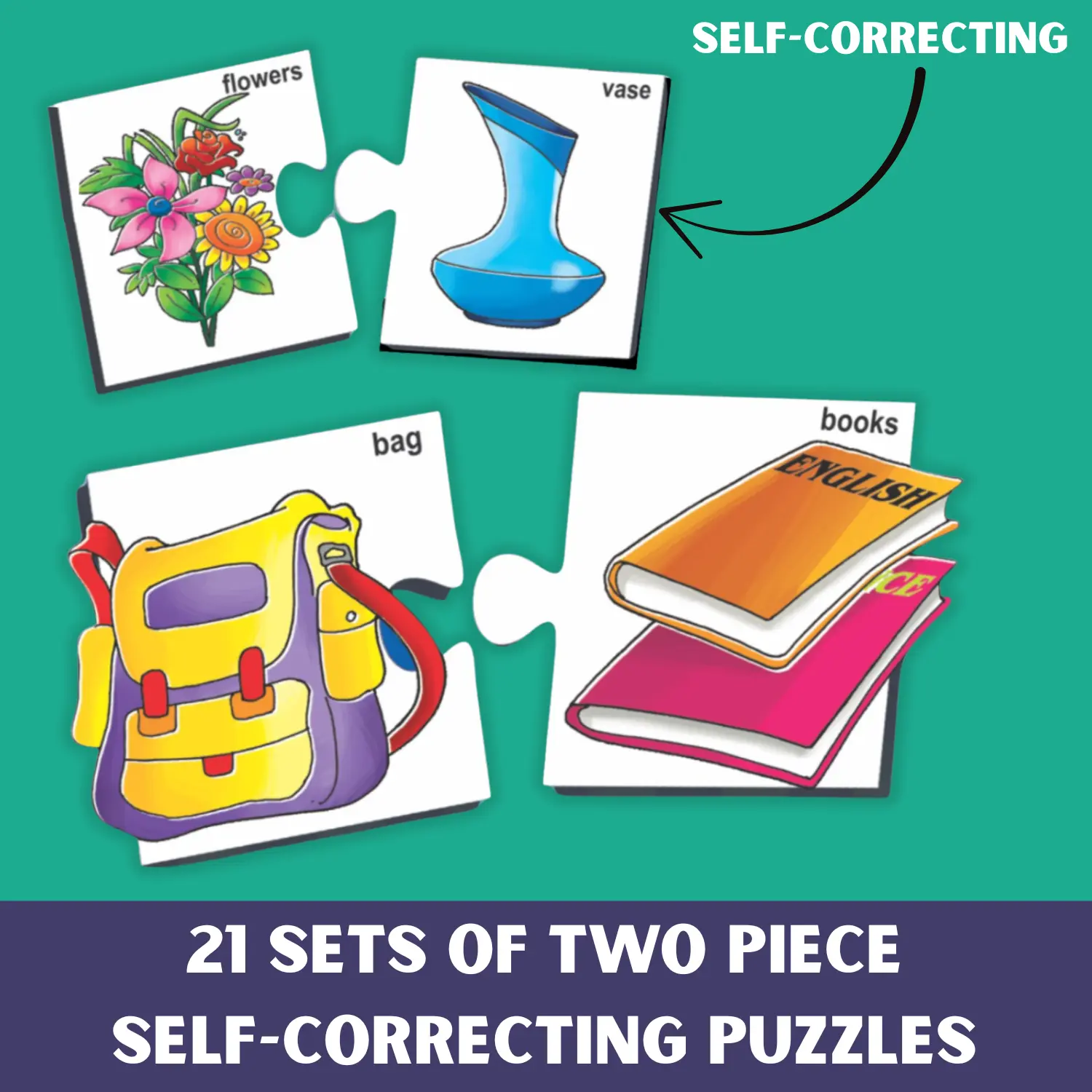
    Each pair has a unique interlocking shape – only the logically correct object pairing physically fits together, giving children immediate self-checking feedback without adult help.
  • VOCABULARY & EVERYDAY OBJECT AWARENESS –
    Every piece is labelled with the object name; children build vocabulary for everyday objects and the purposeful connections between them through hands-on puzzle play.
  • QUALITY, SAFETY & TRUST –
    Smart Early Years products are proudly made in India, conforming to CE Mark safety standards – trusted by parents and educators as part of the Early Years Series.

Smart Things that go Together introduces children aged 3 and up to
one of the most important early thinking skills: understanding that
objects in the world have purposeful relationships.
Twenty-one self-correcting two-piece puzzles each match two everyday
objects that logically belong together - flowers with a vase, a bag with books.
Both pieces are labelled, so children read each object's name as they
match, building vocabulary alongside the associative reasoning the
puzzle requires.

The self-correcting puzzle shapes make independent play possible:
only the logically correct pairing physically interlocks.
If a child tries to match the wrong objects together, the pieces won't fit
- the puzzle provides immediate feedback without adult involvement.
This trial-and-reasoning loop across 21 different everyday object
pairs builds a habit of logical thinking that transfers to classroom
tasks, reading comprehension, and early science.


Parents and teachers choose Things that go Together because associative
reasoning - understanding relationships between objects - is a
foundational cognitive skill rarely targeted by matching games.
It is often used in structured play and therapy-friendly learning settings
for vocabulary, logical thinking, and relational language development.
It completes the Smart Early Years self-correcting puzzle series alongside
Whose Baby? and Whose Home?

How Children Learn

  • A child holds up the flowers piece and thinks: what do flowers go
    with? This is associative reasoning - recalling from world knowledge
    that flowers belong in a vase - rather than simple visual pattern matching.
    The correct answer requires understanding a purpose or relationship,
    not just looking at shapes.
  • When the flowers piece only fits with the vase piece and not with any
    other piece, the self-correcting mechanism confirms the child's
    reasoning was correct - or reveals it was not, without needing an
    adult to say so. This trial-and-reasoning loop is a powerful early
    logic skill.
  • Reading the labels as pieces are matched - 'flowers' + 'vase', 'bag'
    + 'books' - builds vocabulary for everyday objects and the language
    to describe their relationships: 'flowers go in a vase', 'books go in a
    bag'. This is a step beyond simple naming into relational language.
  • The variety of 21 different object pairs means children encounter
    a wide range of everyday-world associations - kitchen items, school
    items, nature items, household objects - building a mental map of
    how the world is organised that supports early reading comprehension
    and science thinking.
  • This set sits naturally at the top of the Smart Early Years self-correcting
    puzzle series: Whose Baby? matches animals to young (factual recall),
    Whose Home? matches animals to habitats (knowledge application),
    and Things that go Together requires reasoning about purpose
    and relationship - the most demanding
    cognitive step of the three.

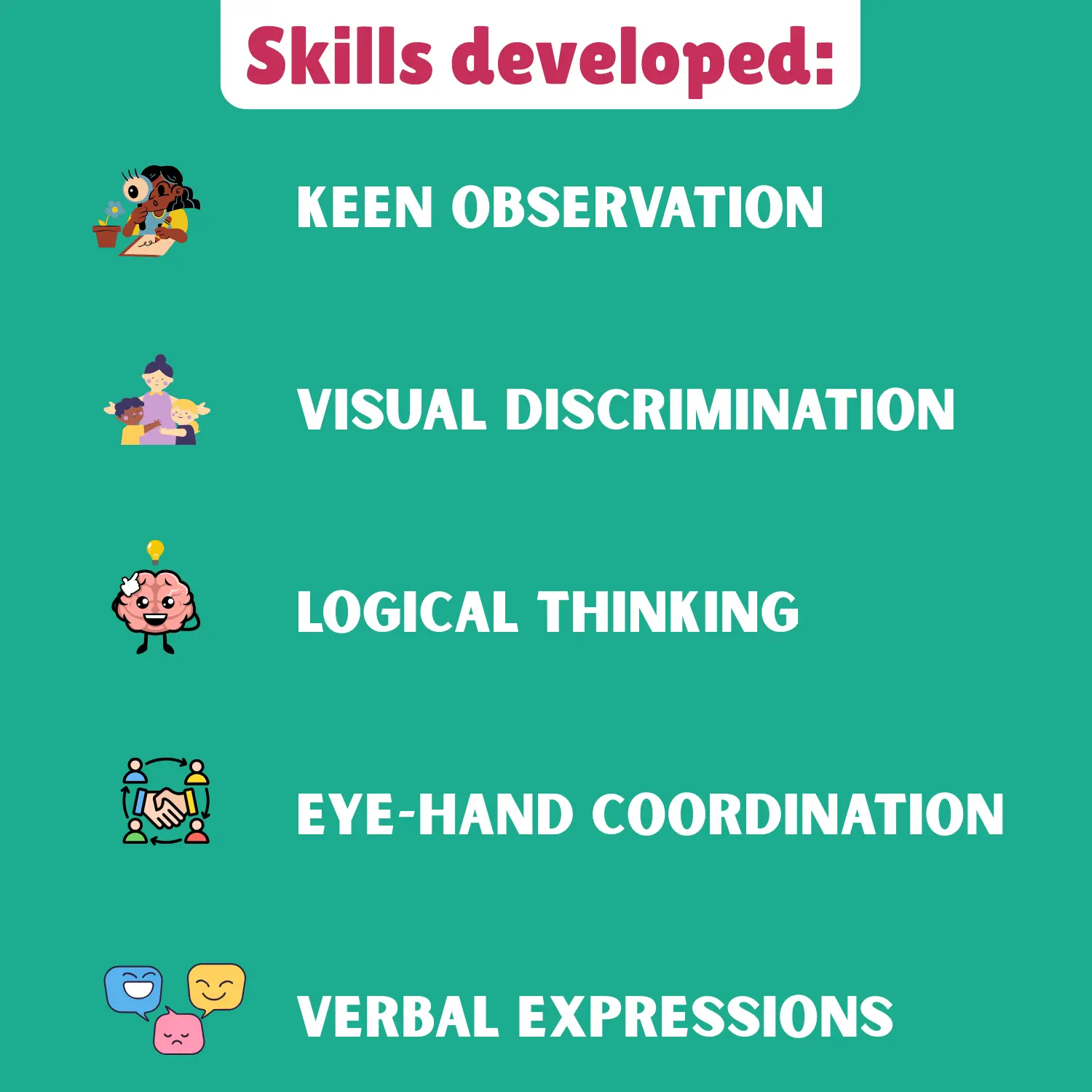
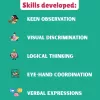
Skills Developed

  • Associative Reasoning & Logical Thinking
  • Vocabulary Building
  • Cognitive Development
  • Observation & Concentration
  • Classification & Category Thinking
  • Early Language & Relational Understanding
  • Matching Skills

Who Is It For

  • Children aged 3 and above who are ready to think about WHY
    objects belong together, not just what they look like.
  • Parents looking for a puzzle activity that builds logical thinking
    and vocabulary beyond simple visual matching.
  • Nursery and reception teachers covering everyday objects,
    categories, and purposeful relationships in early learning sessions.
  • Speech and language practitioners working on relational vocabulary
    and association skills with young learners.
  • Parents who own Whose Baby? and Whose Home? and want
    the third set in the self-correcting puzzle series for their child.
  • Gift-buyers looking for a cognitively rich activity gift
    for a curious 3 to 6 year old.

 

Out of stock

  • Play, Learn & Grow
  • Super-Fast Delivery
  • Skill Based Educational Toys
  • Premium Quality

Description

Smart Things that go Together introduces children aged 3 and up to
one of the most important early thinking skills: understanding that
objects in the world have purposeful relationships.
Twenty-one self-correcting two-piece puzzles each match two everyday
objects that logically belong together – flowers with a vase, a bag with books.
Both pieces are labelled, so children read each object’s name as they
match, building vocabulary alongside the associative reasoning the
puzzle requires.

The self-correcting puzzle shapes make independent play possible:
only the logically correct pairing physically interlocks.
If a child tries to match the wrong objects together, the pieces won’t fit
– the puzzle provides immediate feedback without adult involvement.
This trial-and-reasoning loop across 21 different everyday object
pairs builds a habit of logical thinking that transfers to classroom
tasks, reading comprehension, and early science.


Parents and teachers choose Things that go Together because associative
reasoning – understanding relationships between objects – is a
foundational cognitive skill rarely targeted by matching games.
It is often used in structured play and therapy-friendly learning settings
for vocabulary, logical thinking, and relational language development.
It completes the Smart Early Years self-correcting puzzle series alongside
Whose Baby? and Whose Home?

How Children Learn

  • A child holds up the flowers piece and thinks: what do flowers go
    with? This is associative reasoning – recalling from world knowledge
    that flowers belong in a vase – rather than simple visual pattern matching.
    The correct answer requires understanding a purpose or relationship,
    not just looking at shapes.
  • When the flowers piece only fits with the vase piece and not with any
    other piece, the self-correcting mechanism confirms the child’s
    reasoning was correct – or reveals it was not, without needing an
    adult to say so. This trial-and-reasoning loop is a powerful early
    logic skill.
  • Reading the labels as pieces are matched – ‘flowers’ + ‘vase’, ‘bag’
    + ‘books’ – builds vocabulary for everyday objects and the language
    to describe their relationships: ‘flowers go in a vase’, ‘books go in a
    bag’. This is a step beyond simple naming into relational language.
  • The variety of 21 different object pairs means children encounter
    a wide range of everyday-world associations – kitchen items, school
    items, nature items, household objects – building a mental map of
    how the world is organised that supports early reading comprehension
    and science thinking.
  • This set sits naturally at the top of the Smart Early Years self-correcting
    puzzle series: Whose Baby? matches animals to young (factual recall),
    Whose Home? matches animals to habitats (knowledge application),
    and Things that go Together requires reasoning about purpose
    and relationship – the most demanding
    cognitive step of the three.

Skills Developed

  • Associative Reasoning & Logical Thinking
  • Vocabulary Building
  • Cognitive Development
  • Observation & Concentration
  • Classification & Category Thinking
  • Early Language & Relational Understanding
  • Matching Skills

Who Is It For

  • Children aged 3 and above who are ready to think about WHY
    objects belong together, not just what they look like.
  • Parents looking for a puzzle activity that builds logical thinking
    and vocabulary beyond simple visual matching.
  • Nursery and reception teachers covering everyday objects,
    categories, and purposeful relationships in early learning sessions.
  • Speech and language practitioners working on relational vocabulary
    and association skills with young learners.
  • Parents who own Whose Baby? and Whose Home? and want
    the third set in the self-correcting puzzle series for their child.
  • Gift-buyers looking for a cognitively rich activity gift
    for a curious 3 to 6 year old.


Skill Development

Problem-Solving Skills

Educational Skills Developed

Vocabulary

Age Group

Add a review
Smart Things that go Together 21 Self-Correcting Pairs Ages 3+ Smart Things that go Together 21 Self-Correcting Pairs Ages 3+
Rating*
0/5
* Rating is required
Your review
* Review is required
Name
* Name is required
Add photos or video to your review
4.0
Based on 1 review
5 star
0%
4 star
100
100%
3 star
0%
2 star
0%
1 star
0%
1-1 of 1 review
  1. AV
    Perfect Learning Activity

    A good screen-free activity that builds problem-solving and confidence. Happy with the purchase.